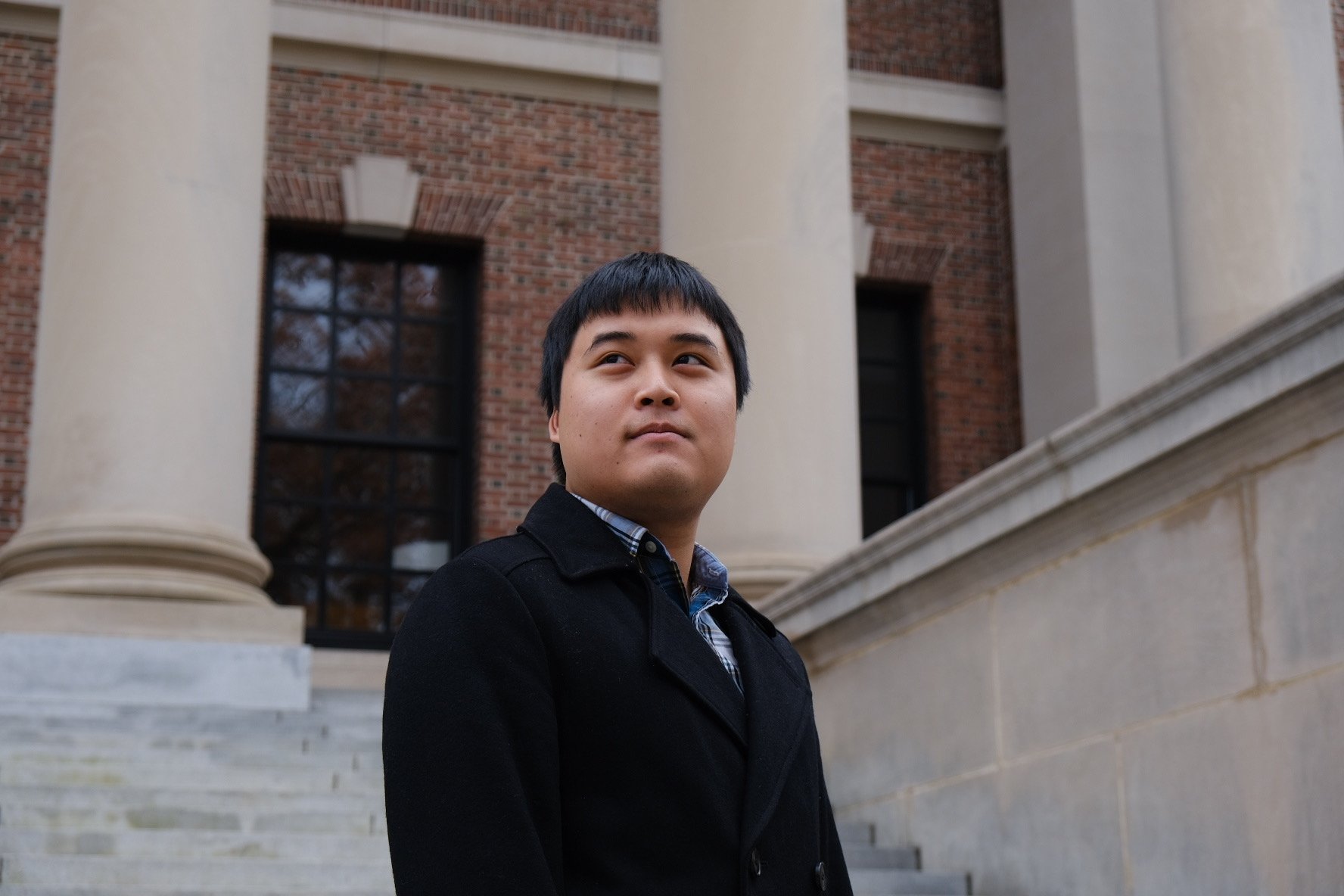
How do animals use their senses to acquire and interpret information about the world? How do the neural networks that make up animal brains integrate these sensory inputs with internal state, and translate them into behavior? I study how brains represent sensory information at whole-brain scale, and how the anatomical wiring of the brain shapes those representations. I approach these questions by developing methods for measuring brain-wide neural activity and combining them with connectome analysis, behavioral quantification, and computational modeling.
I earned my A.B. in Physics from Princeton University in 2015, with a certificate in Biophysics. My undergraduate research focused on visualizing mRNA transcription in vivo and studying the information capacity of patterning gene networks in Drosophila melanogaster.
I received my Ph.D. in Physics from Harvard University in 2021, studying the compact nervous system of the nematode C. elegans. Experimental neuroscience has historically taken one of two approaches: recording from a few identified neurons, or from many unidentified ones. My goal has been to bridge these scales. I developed methods which enabled recording and analyzing whole-brain activity in the worm, used them to characterize how the brain encodes odor identity and intensity, and made some of the first direct comparisons between whole-brain activity and the C. elegans connectome. My Ph.D. work was partially supported by an NSF PLoS Fellowship.
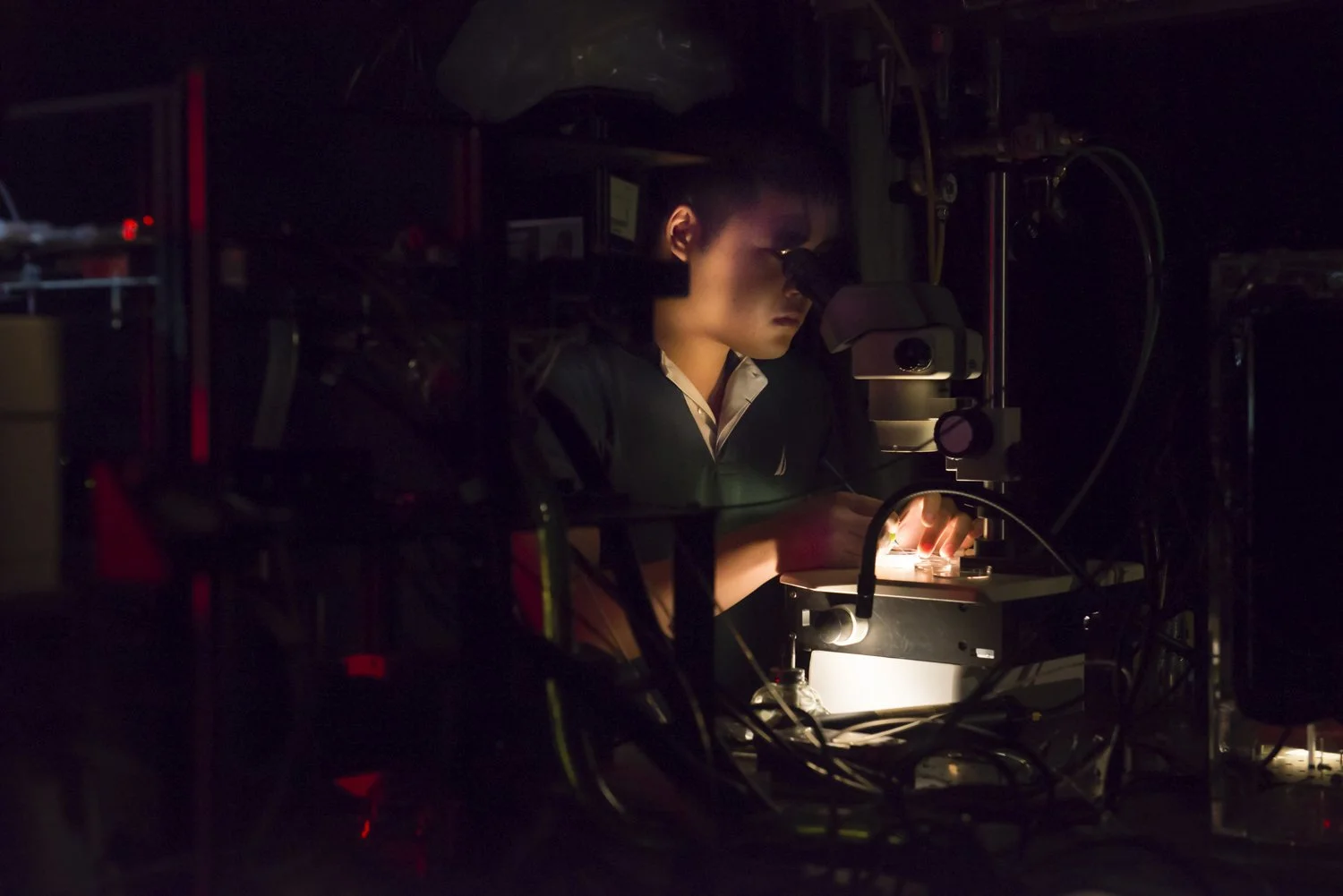
I am currently a postdoctoral research fellow at the Princeton Neuroscience Institute and the Center for the Physics of Biological Function, working with Mala Murthy and Thomas Clandinin. I employ a combination of experimental and computational approaches to understand how the fly brain represents and integrates multisensory information, and how the wiring of the brain supports those computations. I contributed to FlyWire, the first synapse-level reconstruction of a complete adult fly brain, and led the analysis of the brain's network properties, which revealed extensively recurrent connectivity and populations of neurons where sensory and motor pathways converge. In parallel, I built BIFROST, a pipeline for aligning functional imaging volumes to the connectome with micron-scale precision, and developed high-speed microscopes that capture whole-brain activity at high resolution. I am now combining these approaches to map how the fly brain integrates auditory and visual information during courtship, and to build connectome-constrained models of brain-wide activity. My postdoctoral work has been supported by a CPBF Postdoctoral Fellowship and an NIH K99/R00 Pathway to Independence Award.
I enjoy collaborating on interdisciplinary projects and strive to be an open scientist. Much of my work has been done in close collaboration with other groups spanning a range of disciplines, including molecular biology, neuroscience, physics, and computer science. I have mentored many students in the lab over my career thus far, developed courses in physics and neuroscience, and built the FlyWire Academy, an outreach effort which brings cutting-edge connectome data into high school and college classrooms.